Category Archives: New Zealand:April/May

Christchurch

The coach journey from Picton finished bang on time in Christchurch and we were picked up by Jill (cousin of a lady we were in the same church as 19 years ago) (on this trip that counts as a super close connection) with whom we’d be spending two nights before getting “The Beast” (our camper van for the three weeks on South Island).

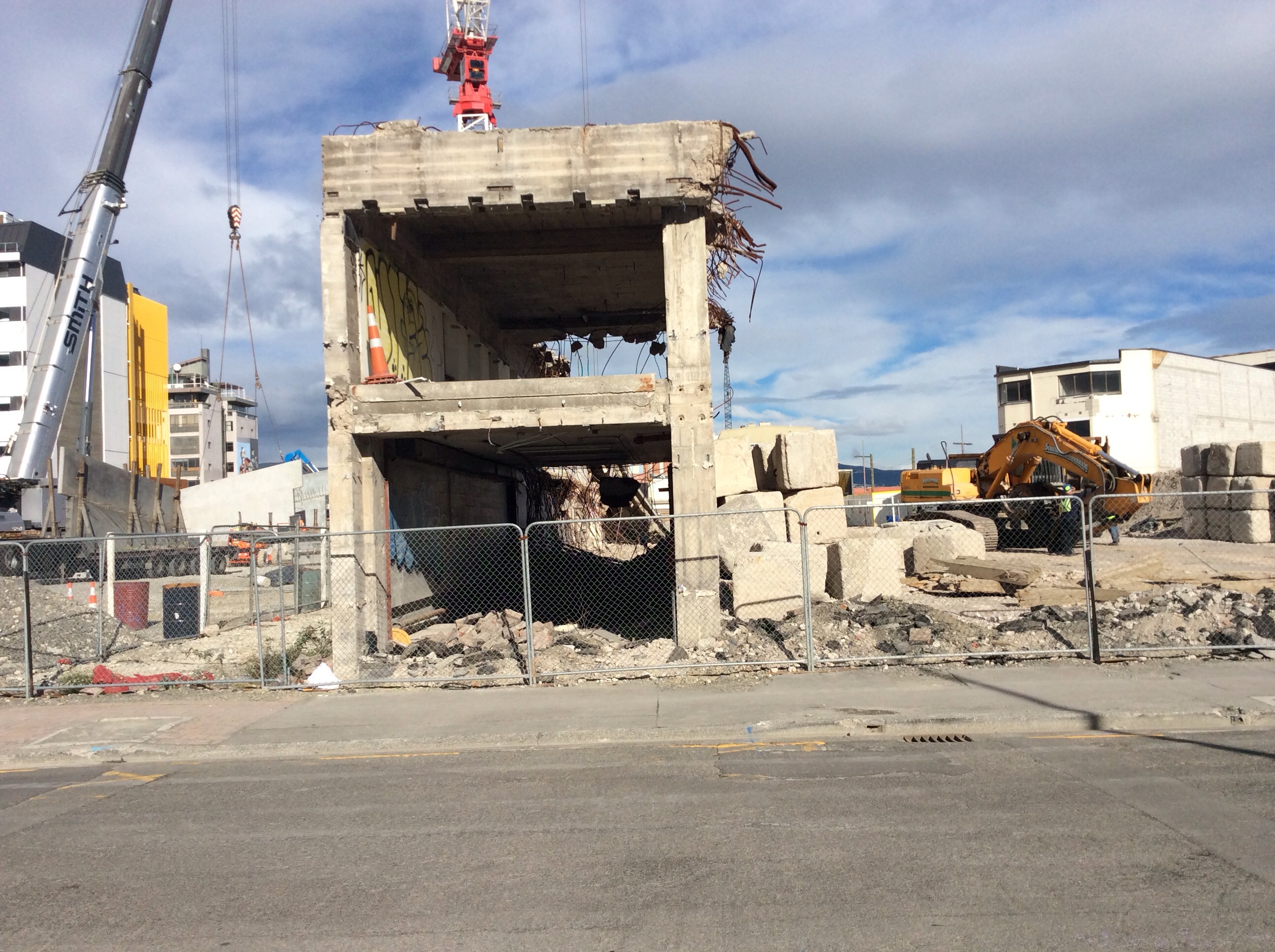
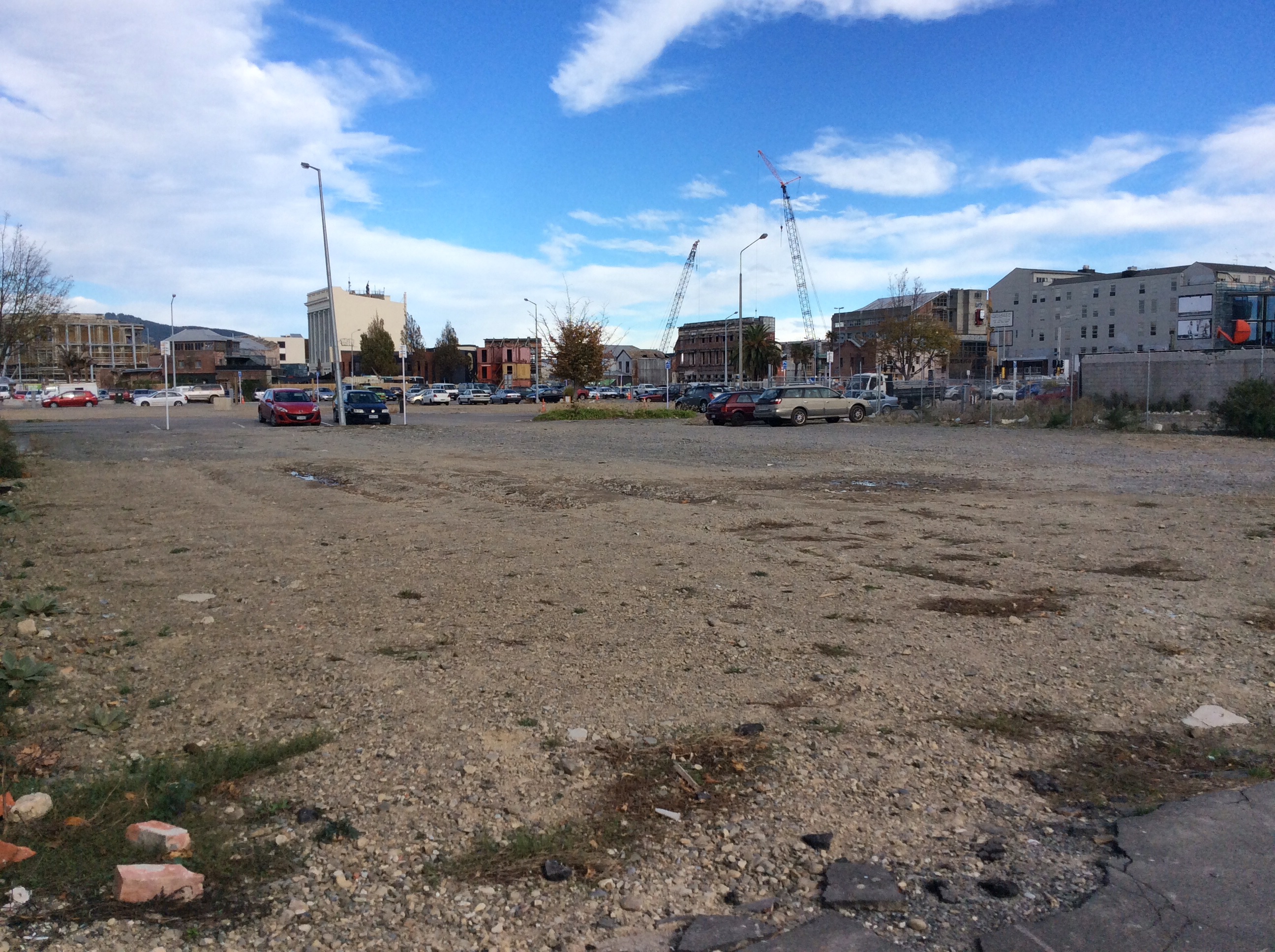
Christchurch is an extraordinary looking place. Hit by a devastating earthquake 4 years ago it still shows the gaping wounds of a city centre torn to pieces. You’d be mistaken, walking around, if you thought that the earthquake had only happened a couple of months ago. Huge plots of land are empty. Half-torn-open buildings, mammoth chunks of masonry and long stretches of boarded up facades surround you. And you keep being able to see much further than you are used to seeing in any city. You look around and you expect to see office blocks, bank headquarters and department stores: not far off hills. It’s a place whose disaster currently defines it. Everybody talks about it. All of the time.

(A typical Christchurch city centre scene – 4 and a half years after the quake)

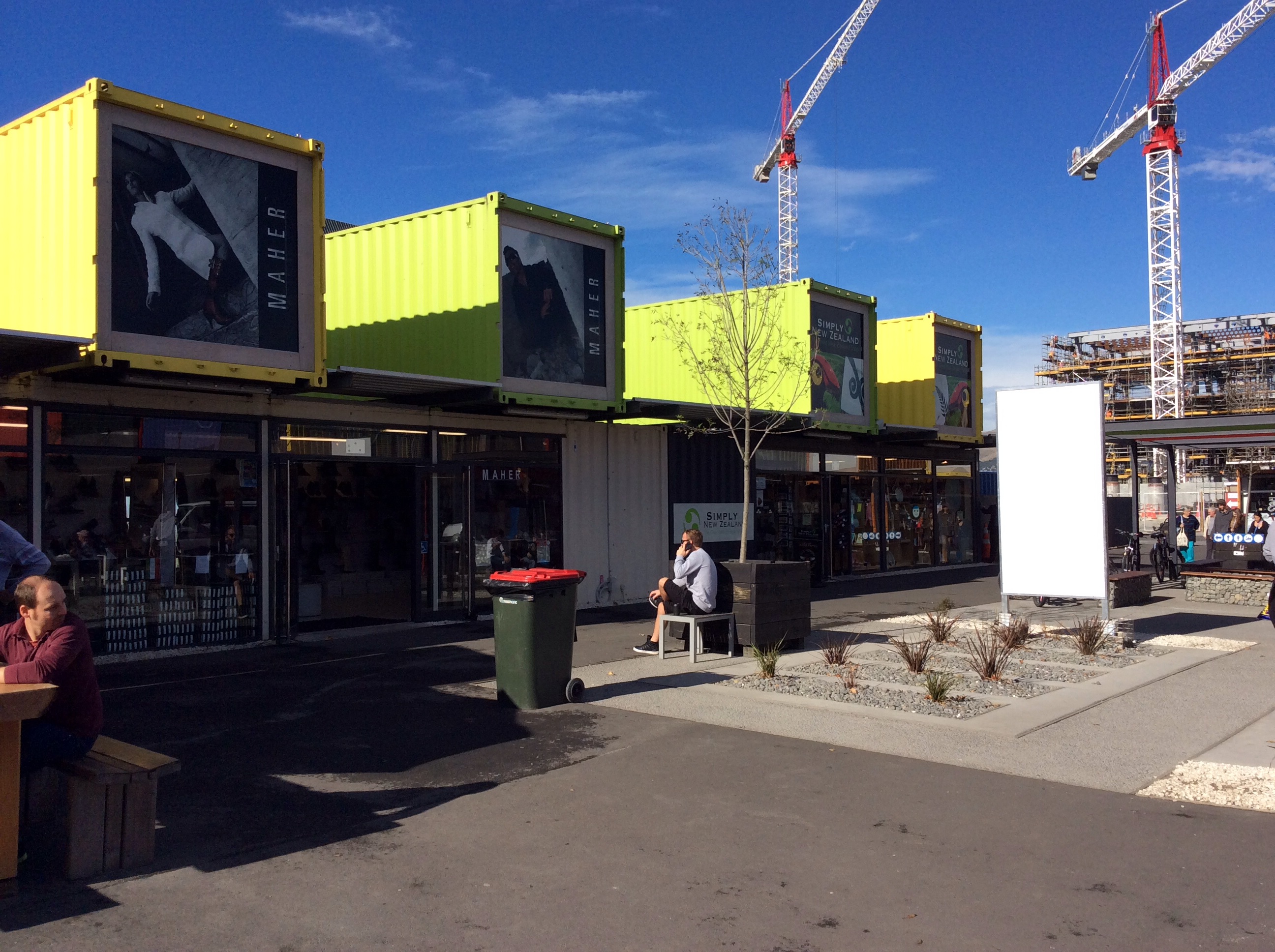
Many people here have mentioned the container “city”, a small area where 40 or so shipping containers have been put so that people could open small shops and coffee bars. We were there at the same time as Prince Harry who drove past us on a tram (he has been in Melbourne, Wellington and now Christchurch at the same time as we have and we get the distinct impression he’s stalking us).
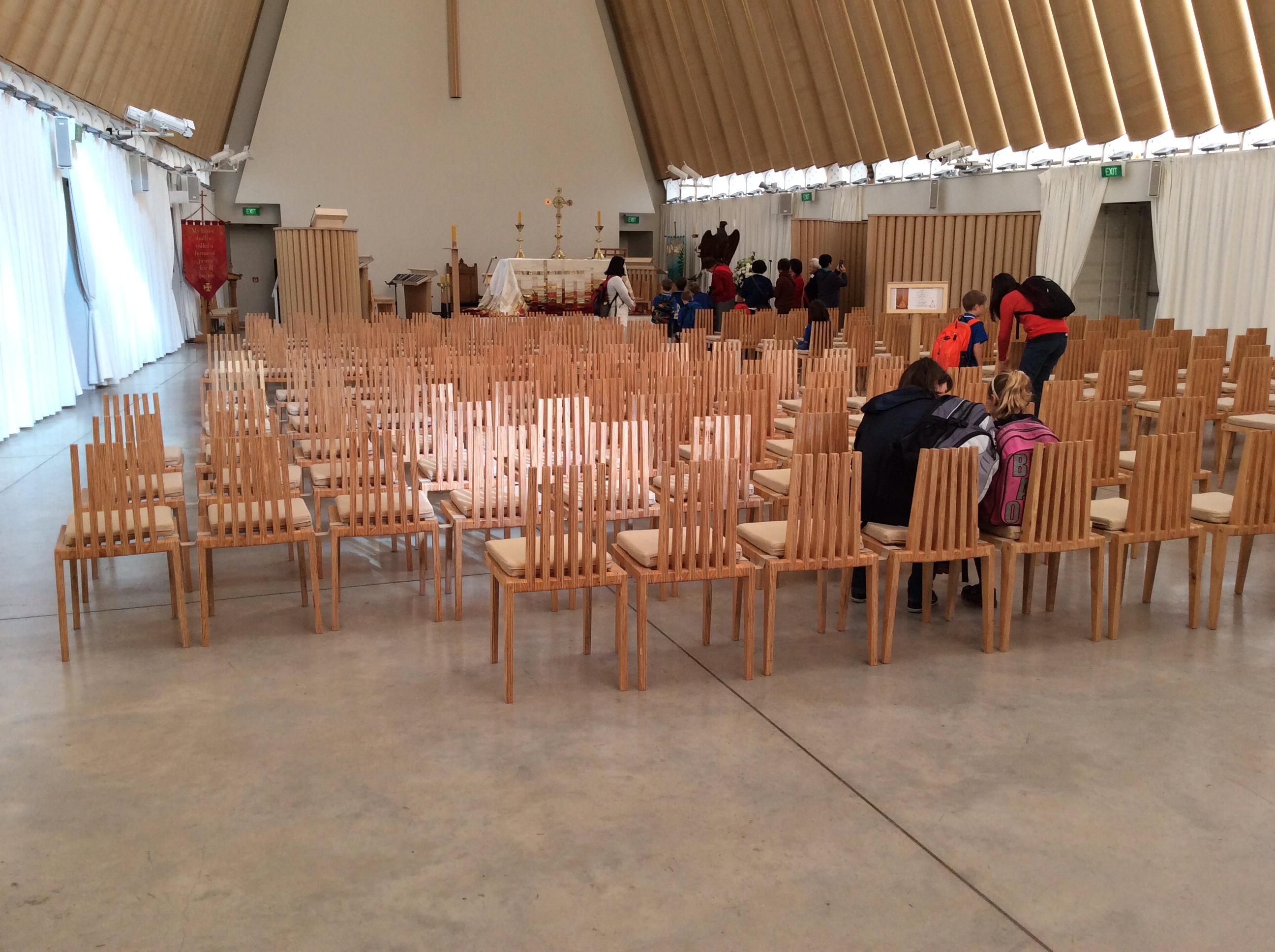
More people talk about the “cardboard cathedral” – a structure that is causing huge division and upset and will lead to court cases and make people shake their heads in despair at the church in general.
Here’s the view of a (reasonably though partially informed) outsider. The cathedral in Christchurch (built in the exact centre of the city when the city was started to be being built (if that’s a tense) in the 19th century and a huge undertaking when there were only a couple of thousand people there) was damaged when the quake struck. It was at first thought that the whole structure would have to be demolished and a new cathedral built. The bishop of Christchurch went public and said this would have to happen but meantime a new temporary structure would be built half a mile away on the site of a demolished parish church – rapidly built and nick-named the cardboard cathedral because its main visual internal struts look like wellying great big cardboard tubes. Which, indeed, they are, but these are just convenient wrappings for the stronger-than-steel wooden poles within them which keep the whole structure ship-shape. The rest of the building materials are pretty standard – a properly weatherproof metal roof and polished concrete floors. And really ugly canvassy curtaining along the insides to form little rooms in the eaves – it has the feeling of a marquee inside.
Over 100 structural engineering experts have since stated that the damaged cathedral is restorable. None has been found to say it’s not. The cost of restoring the original will be a lot less than building a new one. Donations for restoring the original will be a lot more likely to arrive than donations for a new one. I don’t think it helps that the bishop is Canadian (no offence, Canada) and had only been in post a short time and by being Canadian therefore wasn’t a New Zealander and as such is seen as an outsider with different traditions and views (and is also much quoted as saying her cathedral in Canada looks like a grain silo so you don’t need a beautiful, old building as a cathedral). This is probably a deliberate quote out of context by the traditionalists who are agin her.
Anyway, the bishop’s dug heels in, those who want the original restored have mounted a campaign – everything is stalled and lots of lawyers will get fat on the proceeding court led stalemate and meanwhile what could have been an opportunity for the church to bear witness to God amidst calamity is just becoming another calamity.
Draw a line in the sand. Get a new study done in the light of new evidence as to the soundness of the original building and make a thought through choice.

(Inside the cardboard cathedral)


(The container city)


(And just behind the container city, right in the middle of town)

Camper Van

Well, we’re now fully fledged camper vanners having been in our camper van for a couple of weeks. At the depot where we picked it up we had to sit and watch an informative video which included the awesome line…. “In New Zealand you should always drive on the left hand side of the road: if you find while you are driving that your passenger is in between you and the lines in the middle of the road please reorientate yourself on the carriageway.”

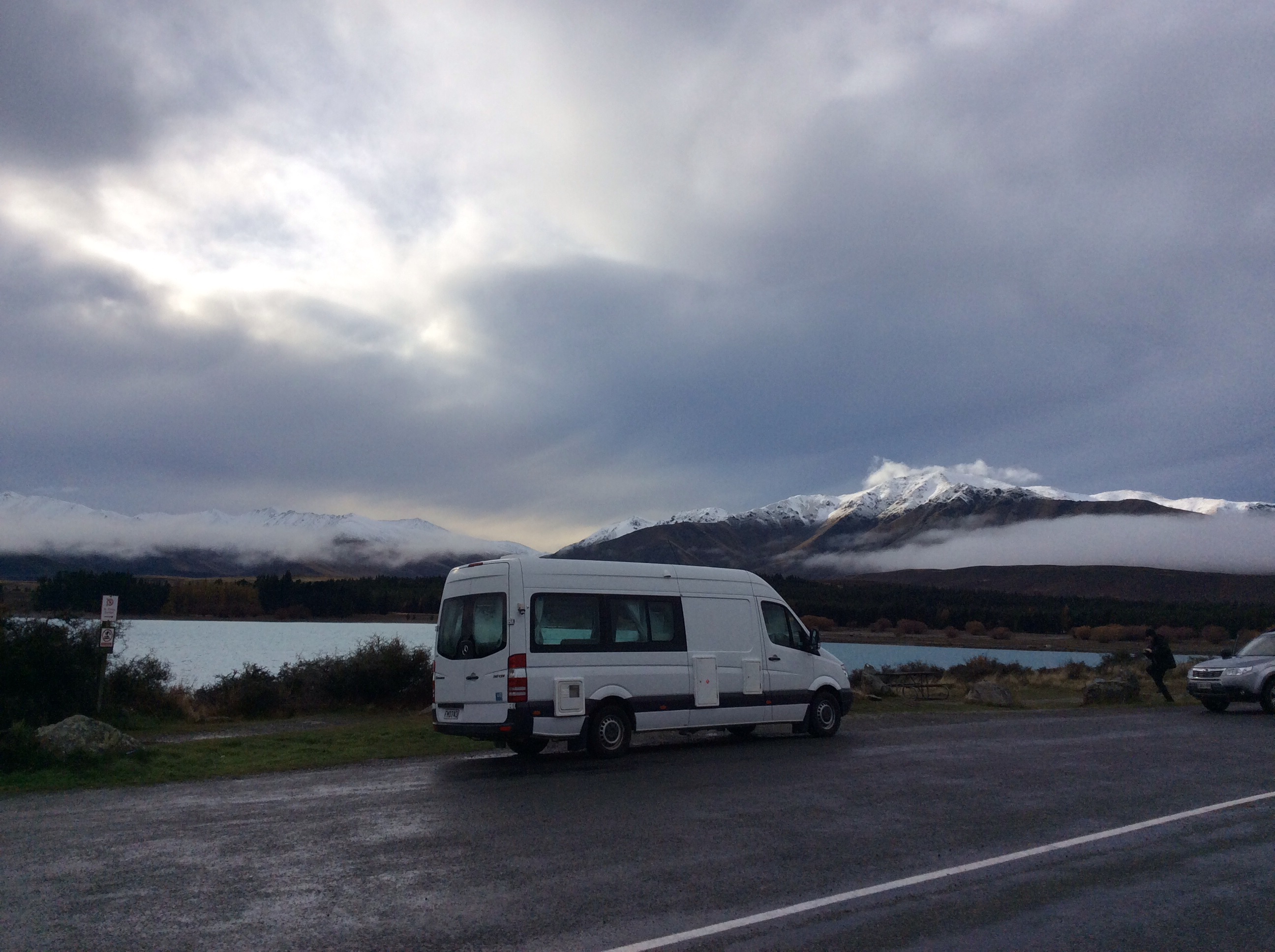
We went for cheap and cheerful. We had to go for cheap, we were hoping it would be cheerful. We booked the smallest self-contained camper; turned up to claim it and found they’d given us an upgrade (they always make it sound like they’re doing you a huge favour when it’s probably down to an admin error or the original vehicle being dead but we were very thankful all the same). Basically, it’s a Mercedes Sprinter van that’s been attacked with a chainsaw and had windows added all round and various ingenious storage units fitted in. It has the world’s smallest shower/loo – good for washing etc, bad for claustrophobics: fridge, microwave, sink, heater and gas hob and a barbecue which folds out cunningly from the outside of the van but as we’re into N Z winter now it’s probably going to stay firmly tucked away.

(Our sweet “wheels”)


(Ella cooking and either dancing with joy, or trying to keep warm. To her left is the world’s smallest shower/loo)

With the van having the world’s smallest shower/loo it means we are officially self contained and therefore can park pretty much anywhere outside of civilisation and don’t need to be dependant on campsites.

Brilliant.
However, what the blurb didn’t tell us was you can only use the heater (very necessary piece of kit in the increasingly cold evenings) and the electric sockets when the camper van itself is plugged in to the mains which, due to the plugs they’ve got, can only be done when you’re in a campsite. Similarly for recharging the reserve battery which they suggest you do every other day. So, we’re not quite as free-from-campsites as we’d hoped to be.
We have done some “freedom camping” (we stayed at a look out point on the top of a mountain our first night: awesome view – excruciatingly and literally mind-numbingly cold overnight) and also tried a few campsites along the way.
I must admit that, never having campsited before, upon successful completion of the first thorough excavation of the collection tanks lurking in the nether regions of the van into the imaginatively named “dump station” and refilling the water tanks I did feel very rugged and manly even though, as we were the only residents of that particular camp site there was no one around to be thralled at my rugged campsiteness. Ella dutifully swooned but that may have been the dump station fumes.
The main reason I thought it would be a good idea to get a self-contained camper van was so we could sit in the middle of absolutely nowhere (and in New Zealand there are lots of middles of absolutely nowhere) and, if I’m honest, more importantly, to not be on camp sites because camp sites tend to be a gathering place for campsite people. Campsite people are weird. They are permanently jolly and wear shorts they’ve long since outgrown and they always try to engage you uninvited in conversation from their deck chairs and always have kit you wish you’d thought of bringing but they have done this sort of thing for so long it’s a perfect art form for them now but because you are also on a campsite they assume you share some deep bond and, like them, have no shame.
I’m not so into all that chatty stuff. (Add that to the list, along with thumbs ups – see skydiving entry). I want to know how early is reasonable to pull all the curtains closed so you avoid that awkward eye contact of passers by, or neighbours, because when it happens I feel the need to make some ridiculous acknowledging gesture which is bound to be misconstrued as being friendly and they’ll take it to mean I want them to come over and chat. But it doesn’t, it really doesn’t.
It’s meant to mean “this is my cave: admittedly it has wheels and I’ve been forced to bring it into your midst for the purposes of having electricity and heat but it’s still, fundamentally, my cave. Go away.”
Ella has none of these hang ups.
However, as it’s turned out, it being winter here, unsurprisingly the camp sites are mostly relatively, and in a couple of cases mostly totally, deserted.
This is good, and in addition to that I’ve discovered the optimum angle at which to park to leave the minimum of window frontage on display to the passing world.
Ella says I can’t put a fence round the van.

(View from our pitch on one of the camp sites…… And below is the same  campsite the next morning. #perfectcampingconditions)

(And here is a lake I jogged to. Not too shabby)

It’s been fun driving a big long vehicle. I did almost get it inextricably stuck in a walled-in supermarket car park which, once you were in seemed irresponsibly small for large camper vans to be lured into. Nevertheless I managed to park as unobtrusively as possible (which was to unobtrusiveness the same as an elephant carrying a party balloon). Ella went in to the shop and I waited in the van in case people couldn’t get out of any of the parking spaces we were possibly preventing exit from. After enduring a few native hand gestures of welcome I figured it would be diplomatic to leave and find somewhere else to park. This however required me to wait for two cars to leave before I could achieve the right angles to safely manoeuvre out again and nearly scraped a sign on exiting which, I noticed when I looked back said “No Camper Vans Please”. I would contend that, by definition of my not having seen it on the way in, it wasn’t nearly clear enough.

That evening, with curtains satisfyingly completely drawn I managed to destroy 20% of my entire wardrobe in one fell swoop. 6 night light candles burning merrily, giving a bit of ambient light and even a little extra heat, placed in a bread tin (cos we’re safety conscious and the bread tin would keep them safe). Someone opted to place the bread tin onto a dinner plate in case the bottom of it got hot and burned the camper van worktop. Still looked pretty safe. Then someone (I know I keep using the term someone but I’m trying to protect the guilty by keeping her identity hidden) opened an overhead cupboard and a loaf of bread fell down, hit the edge of the dinner plate which launched the bread tin and candles in an arc of waxy warmth all over my trousers and shoes and (my only) jumper.
Never fear, thought I, if there’s one thing being a vicar has taught me it’s how to get candle wax off things (mainly carpets and pew kneelers). So, after buying some brown paper from the local post office the next day I commandeered the camp site ironing board and iron. Unfortunately, in my uber-zealous ironing on the dirt-cheap, waffer thin ironing board I managed to imprint long lines of xxxxxxxxxxxxxxxxs from the metal mesh the board was made of and which were hidden under its micron thin cover. Top + trousers ruined. Happily, we’ll be off to the States soon and it’ll be hot so I’m consoling myself with the thought that a.) they would only have been unnecessary baggage in the heat and b.) I might legitimately make the 7kg carry on luggage allowance on the next Qantas flight.
New Zealand is by far the prettiest country we’ve visited. When we were in Queenstown we drove the road to Glenorchy which is on the list of the 10 most beautiful drives in the world. Stunning – with a new reason to stop and take photographs round each of the very, very many bends. We also visited Arrowtown which was pretty and stumbled across a little museum in which many of the exhibits were touchable, climable on, sittable in and contained stuff like huge saws and tools U K museum curators would have slapped barriers round and shouted “health and safety nightmare”. A printing press was there, open to the touch, with a massive roll of newsprint stretched across rollers – you could just reach out and stick your finger through the paper if you wanted. And yet, no one had.
Either, New Zealanders have and use far more respect and common sense than we do and this magically rubs off on visitors. Or, some oik had nicked the barriers and we weren’t actually meant to touch any of the stuff we were handling. Oh well.
Some of the early medical exhibits were interesting – including this everyday essential….

World travel – it’s an eye opener.

Sky Diving

Sky diving. You get in a little plane, ascend very quickly to 16,500 feet and then get out.

It was one of those things that we had agreed back in England would be one of the “specials” on our trip. We’re watching the budget on everything but had said if there were one or two once-in-a-lifetime opportunities that came along then we should feel able to take them. (I’ve got an “everything on red!” feeling coming on for when we get to Vegas……)

Sky diving above the Fox Glacier was on the short list. On Tuesday this week we found ourselves only a few hundred km away from Fox and woke up to the most glorious crystal clear, calm sunny winter morning so we thought, let’s go and see if there’s room for a small one. Ella figured that we needed a strong “ground support team” and so wisely opted for the “terra firma” option. I went for the terror affirmer choice.

I’ve bungy jumped before – from a tiny platform high up on a cliff face above a cave in the South of France. High on the list of the 5 coolest things I’ve done was catching my “Englishman abroad” straw hat in one hand as it flew off my head mid-jump and holding on to it so at I could then replace it while being lowered to the ground at the end of the jump – but there was not to be another hat incident at the sky diving. Sadly, you had to wear a fairly unfetching swimming cap affair.

I had no idea how I would feel in the plane. As it was I felt entirely emotionless. Not only no nerves at all, just nothing at all, really. I was interested, but not what I’d call excited. I think my body just couldn’t figure what it should do or how it should feel and so flicked onto a Trade Test Transmission mode, a bit of holding music until something happened that it could link to a known, appropriate response.

I was nervous when I bungy jumped, which was about ten years ago. I went with my two sons and as they were both due to jump ahead of me I was secretly hoping one of them would wimp out so I could escort them back down the mountain without losing face – but they both executed ridiculously cool swallow dives and muggins was left with no choice but to go through with it. And then, I was nervous. I remember standing on this tiny platform with two French guys shouting French stuff and thinking: “Why would I want to do this? I’ve got a rubber band round my ankles and the floor is a heck of a long way down and at some point I need to turn upside down. How does that happen? How do I turn upside down?” Then some more rabid French insults from behind (I was the last to go and they wanted to pack up and go for their garlic croissants or something).

So, with my main reason for going through with it being not wanting to offend, I stepped off. My hat, which they had gesticulated I should take off and I had made clear was staying with me, flew off – caught it – was so pleased I then didn’t really think anything else apart from wishing I’d stop bouncing. But climbing the mountain, watching the boys, standing on the ledge – really nervous. Sky diving – nothing.

Older? Closer to death anyway? Fully confident in Nico, my jump partner who did have very cool sunglasses and looked the sort who’d own a cool flying jacket too? He’d be doing all the work, after all – I’d merely be his parasite for the duration. Or was it just my body saying “Didn’t we agree no more jumping off high things? You’re on your own pal, I’m off to my happy place.”

Probably a combination of all the above. But no nerves on the way up. There were two others jumping and when we got to altitude they both sodded off, leaving me and Nico. I had been sitting in his lap for the past fifteen minutes which was odd, and he shuffled us along towards the door – shouted “remember the banana” (stick your legs back, head back, and make like a banana) and slipped out of the plane.

That first two seconds is indescribable. So, to pick up from there…… Initially you’re facing the sky, which is absolutely fine because there was nothing to see really, – just sky, and a perfectly good plane disappearing which brought a pang of separation anxiety. Then you flip over and there’s a really big planet rushing at you full force. It was at that precise moment my feelings decided to rejoin the party. If they’d been off in a strop in the plane they had come back with a vengeance. The free fall was 70 seconds and you could see both West and East coast at once, and straight below you, Fox Glacier, Mount Cook, beach and rainforest, all in one vista.
To be honest, the most awkward bit of the descent was neither battling the pain of the goggles digging into my face, nor my eyes watering, nor my ears popping, nor my feet being freezing. No, it was Nico trying to get me to give a thumbs up so he could capture it on film. I’m not a thumbs up sort of guy though. I’m more a casual nod of acknowledgement sort of chap. He took about 70 photos on the way down and seemed to want a thumbs up in over half of them.

“Wahay! Give me a thumbs up, Jonathan!”

“No, you’re alright, Nico.”

“Thumbs! We need thumbs up in photos.”

“Honest, we’re good thanks.”

“Give me five then!” And holds out his hand.

“You’ve got entirely the wrong continent, mate. I’m English.”

“Righto, just one last photo before we open the chute. At least give me one thumb!”

There were replies to that.

Is he paid according to the number of digits he manages to capture in his photos? He had said in the plane that even if he had a heart attack on the way down the parachute would open automatically. I wondered if I could punch him unconscious. In the end I gave him a solitary thumb up along with what I hoped was a suitably ironic facial expression and he seemed happy enough and opened the parachute and we continued our fall at a more leisurely pace.

With the chute open we could take the goggles off and that gave an even better view of the ground. Parachuting is definitely the way to go. Free fall – too fast. Floating down – absolutely perfect. Nico gave a running commentary of all the sites to see and tried to get some variety in the photos he was taking by throwing in a “what about a salute then?” to try and get through the plucky Brit’s defences.

We landed, not entirely in the Bond-like pose of my imaginings, skidding in on our backsides. Then it was a quick unclip and one last “Thumbs up? No? OK” and a hand shake sealed the deal.

I couldn’t find a box of Milk Tray to present to Ella so she had to make do with a bar (slightly broken after the landing) of Cadbury’s.

Can’t help it – now feel invincible. It’ll probably wear off soon enough but I’m on the lookout for kittens in trees and falling things I can catch and forest fires to extinguish.

For, now and forevermore – I am a skydiver – (or, as spellcheck just suggested…… a screwdriver.)
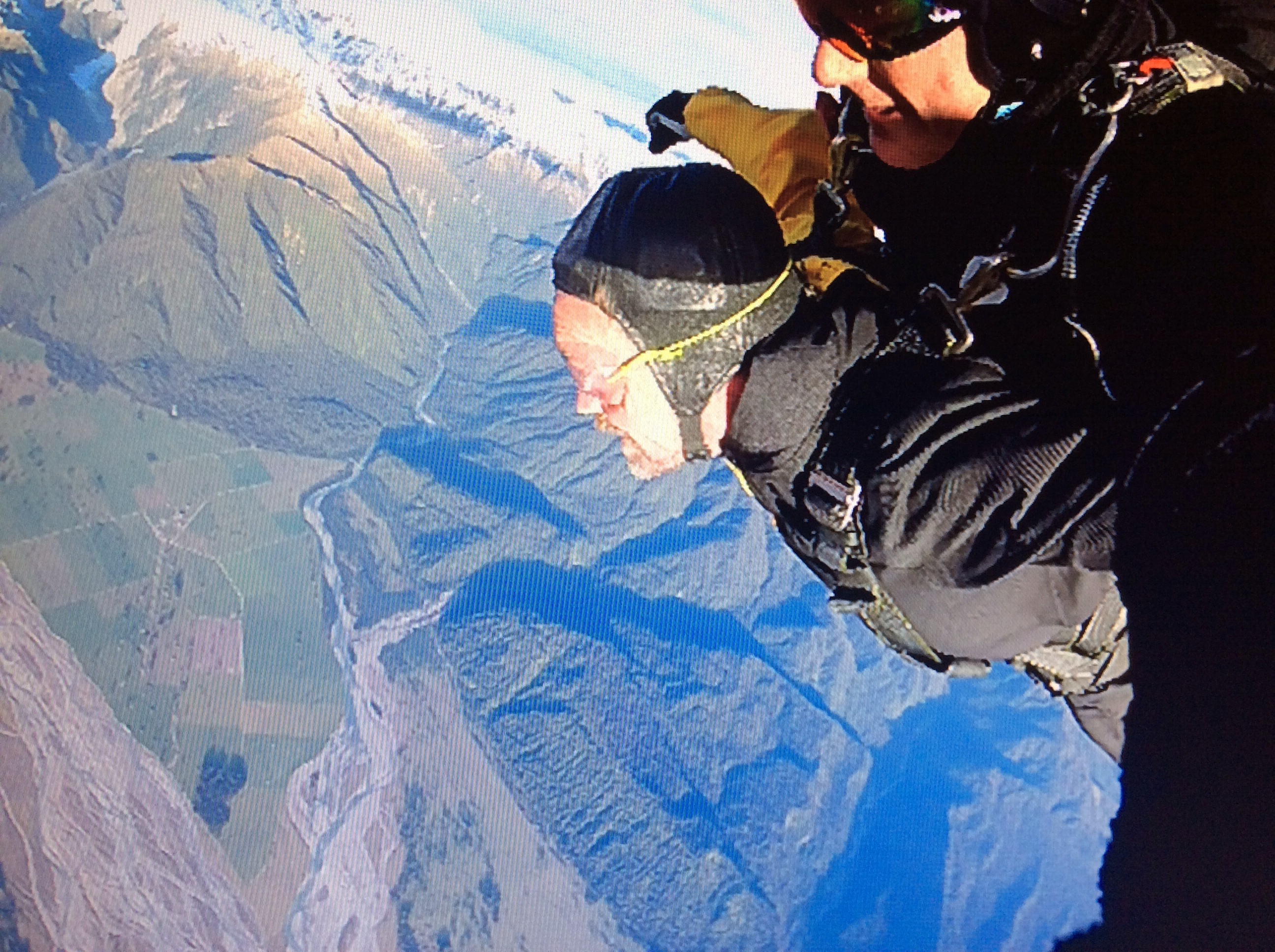
 (Quite a good view. Quite a bad cap)

 
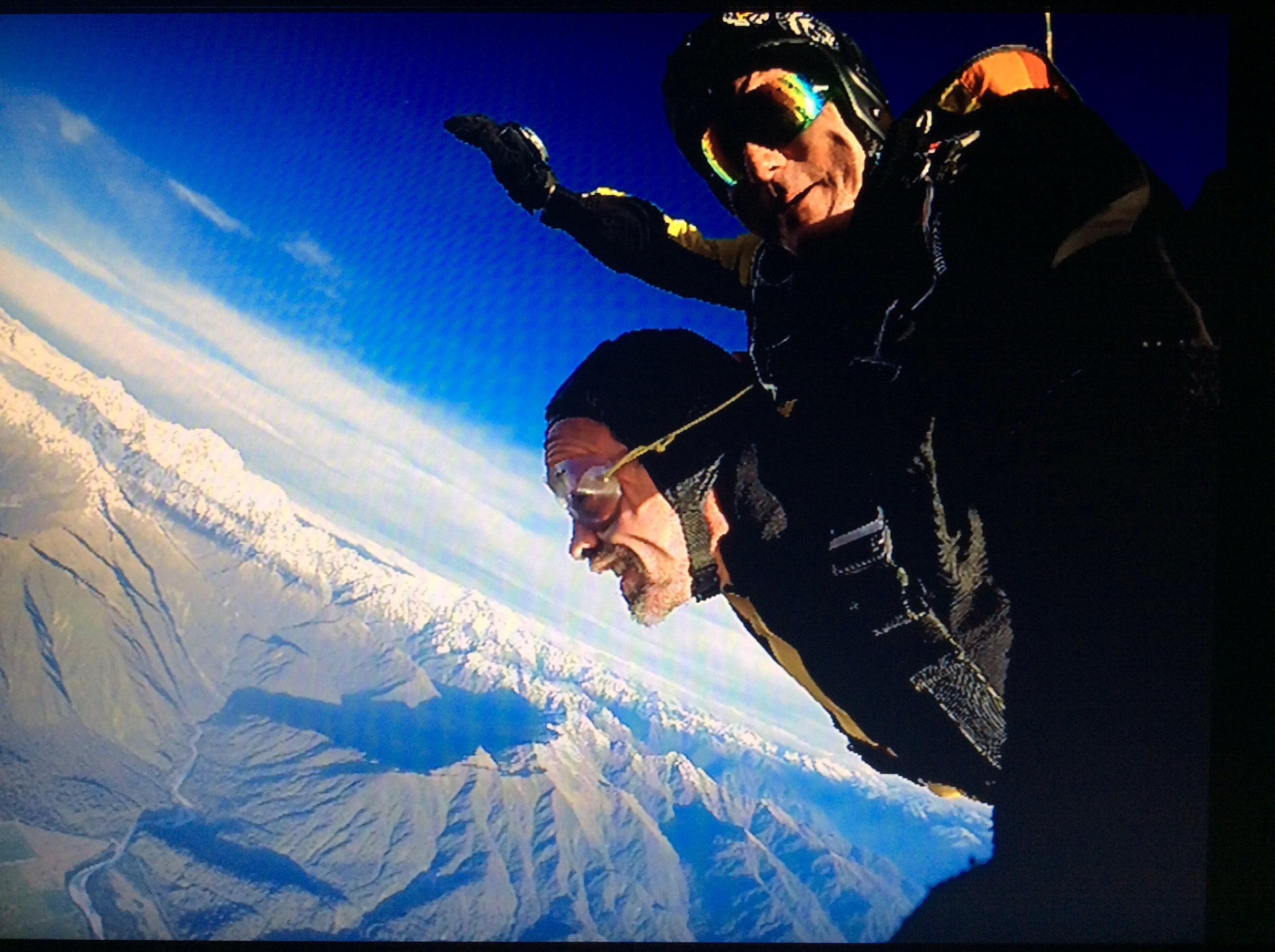
 (Nico waving to the camera. Me having facial reconstruction.)


(Down safe and sound and forever more……. A screwdriver)

Lord Of The Rings

The only real time we spent outside of Ngatiawa during the month was to drop into Wellington (which is apparently, officially the windiest city in the world, – and I can believe it) so that Ella and I could make wedding rings for one another. 29 years ago we had no money at all and so all we could afford were really thin, cheap gold rings and mine had got more and more worn over time until at the New Year it decided to end its life as a ring by snapping.

Having been told it would be pointless to fix it given its overall condition, we figured it would be symbolic at the start of part II of our life together, while halfway through our sabbatical year and half way round the world, to make new rings.

We contacted a crafty person in Wellington who had the means and the skills to show us what to do and we spent two wonderful afternoons making new rings for each other. It was a bit like being back at school only without the possibility of being sent out for misbehaving and being allowed cups of tea. We also melted down our two old wedding rings (which resulted in a surprisingly tiny amount of gold – not even enough to make a single new ring – so Ella crafted a shape in a cuttlefish shell for a mould and created a little pendant that the lady soldered on to her bracelet.) (Ella’s, not the lady’s – that would have been cheeky.)

The process of making the rings was fairly straightforward: first off we had to make prototypes out of hard plasticcy wax which would then be sent away to have moulds made of them. This involved sawing and filing and sanding and, quite frankly, lots of pretending to be Gollum – and then when we were sufficiently surprised that we hadn’t made a complete pig’s ear of them they got sent off to the silver people and a week later back came the rings cast and ready for us to finish filing and sanding and trying on and going “ooh” and “it’s stuck” and generally sculpting til we had the finish we wanted.
And they look awesome!

 (The elves at work on the prototypes)


 (Finished!)

It’ll be worth being married another 29 years just so’s I get to wear mine for that long.

I’m secretly waiting for a bunch of dwarves, orcs and Cate Blanchetts to waylay us in order to read the strange markings on the inside of Ella’s ring which look to the untrained eye to be scratches from my shoddy workmanship but might well be ancient rune markings and which sends them off to Hobbiton (like to see them get 75 dollars a head off the orcs when they turn up for the tour) and then grabbing Bilbo and running off up mountains all over New Zealand.

Talking of running, I started again, finally, while at Ngatiawa. Having taken my trainers and running gear away with me and only having got them out three times in Zimbabwe and never since I was determined to make it worthwhile having used up a goodly proportion of my allocated baggage allowance on them by getting back into shape.

The main difficulty was that Ngatiawa is in a valley and there is nothing flat in sight. So every second day my route was, turn right at the end of the drive and run up a steep, steep hill sounding like a wounded hippo til the road ran out. Then turn round and run down hill, back past the driveway, then turn round and run uphill back to home. Ella said, after a few weeks: “It must be beautiful running in such stunning scenery” and I had to confess that when I run I’m oblivious to the scenery because all I can hear is a voice in my head screaming “Kill me! Make it stop.”

This had improved by the end of the 4 weeks. The voices were still shouting the same thing, but the runs were thankfully taking less time.

We left Ngatiawa physically and spiritually fitter – and, as the ferry to take us over to the South Island left from Wellington at 8.30 in the morning we arranged to spend the evening before in the city at the home of a fantastic couple who had been at Ngatiawa the weekend before and whose house overlooks Wellington and who have their own Heath Robinson looking monorail-open-elevator thing running up the cliff face to get from the road to their door. Their own monorail-open-elevator thing! Straight up the cliff! I’d have completed signing the papers for the purchase by the time I was halfway up the monorail-open-elevator track had I been shown around by the estate agent. You ride in a sort of big open crate, straight up the cliff face! To get to the house! Good luck postman and paper boy!

A Ferry, a Coach and a Feijoa Frenzy

Early next morning we boarded the big inter islander ferry for the several hour journey to the South Island. Not being the best ferry passengers in the world (due to a propensity for nausea, not because we’re antisocial or disobey all the rules – although it was me who got shouted at – twice – over the loud speaker on the Sydney Harbour ferry for standing up on the top open deck to take photos) (what do they expect? It’s Sydney Harbour and all I could see were people’s heads…). Anyway, we found we could upgrade to the “executive lounge” for the same price as they were charging for a breakfast and midday scones and coffee in cattle class – and in the “special lounge” you got comfy seats and breakfast, coffee and scones and muffins and cold drinks al for free. And no children. And newspapers and 2 year old copies of Top Gear magazine. And you got to look like posh people to all the poor people outside on the deck. A few of them looked in at the windows and I waved and thought that their lack of response was because they are classist and objected to our comfy seats and free Top Gear mags. No one responded at all. Not to little furtive waves or even grander ones. Halfway through the trip I went out onto the deck to mingle with the poor and saw that it was one way glass in the windows. You,could see out, but not in. They’d been looking at their own reflections and couldn’t see in to the luxurious innards of the “luxury lounge”. Probably just as well as a riot may have ensued if they saw the decadence in which we wallowed.

After a pretty voyage and duly fortified by a lot of free scones – though not really proper scones, more like biscuits but they were free, the ferry dropped us at Picton, a place as picturesque as a sneeze.

Fortunately, a coach was there to jump onto and travel down the coast to Christchurch.

There is a fairly random list of things you are allowed and not allowed on this coach. It’s displayed prominently on the walls and the driver also helpfully read it through to all of us before we set off. Among many other things, you are not allowed to have any hot drinks and nor are you allowed any form of hot food. You are, however, allowed cold drinks and cold food. So I’m wondering if it’s OK if you have hot food and wait a while…

You are allowed sandwiches, but you are not allowed fruit. And no milk shakes.

I’m not sure where they stand on feijoa smoothies – for I have bought one by mistake. I got it in Picton, so maybe it was getting me back for insulting it. A feijoa is a fruit much grown in New Zealand. I think its name is Maori for “Yuk.”

I mistakenly bought a bottle of Feijoa Frenzy because it looked to all intents and purposes like it was cloudy apple juice. It comes to something when you have to imitate something else in order to sell your evil foodstuff to an unsuspecting public.

I would never have bought one knowingly. We were first fed feijoas at the monastery. I”m sure they thought they were being kind: I thought I must have done something terribly wrong for which they were punishing me.

Have you ever had a feijoa?

You would remember.

They look innocuous enough – they are small and green and soft, a bit like Kermit the Frog. But imagine Kermit the Frog’s psychotic evil twin who has a taser gun and a mallet. Sure, he’d look just like Kermit, and just like Kermit he’d be all green and small and soft and friendly – but as soon as you took a bite out of him….

That’s the same with feijoas.

(I just woke Ella up to tell her I’d spotted a sheep. I thought it was funny. She didn’t.)

If someone was fed only on toenails and mud – if that was their sole diet and all they had ever eaten and then, say, after ten years of that diet they were given bread to eat I’m sure they would devour the loaf or bun or bap or French stick and ask for more, amazed at having a different flavour to savour. Now imagine the same initial scenario, but after ten years of toenails and mud they were given a feijoa to eat.

They would spit it out.

I cannot see how people eat them – they taste of something between Ralgex and Deep Heat. You eat them and you are eating a rugby changing room.

I think they are only endured in New Zealand as the small print around the bottom of the label reads: “One day the world will recognise the glory of the feijoa. Until then, they’re all ours.”

Please, please keep them.

All of them.

 (The offending article)

If a barman ever offers you the choice of a feijoa juice or a smack in the head the correct response would be: “Hit me.”

If he then starts pouring the juice: “No. I meant hit me!”

Opt for the punch.

A flurry of punches if need be.

We’re heading down to Christchurch where we’ll be picking up the camper van. The man three seats ahead of us needs to learn how to put things properly on the overhead shelf. In the last ten minutes first, a coat fell down onto his head, (picked up and put in between him and the lady traveling with him). Then a drink bottle (hope it’s not contraband – if it’s a milkshake the driver’s going to duff him up). And just now a smart phone with an emergency charger attached (I know what they look like now as we bought two of them and then accidentally rendered them useless by throwing away the leads that connect them to our phones and iPads). Right onto his head. A little bit painful and a little but funny for everyone else. Every time we go round a sharp right hand bend something else comes down. Stuff must be balanced up there like those coins in the arcade machines. Why doesn’t he re-pack it all – or bring it all down?

The reason for the sharp bends and cascade of possessions is that we’re zig zagging through stunning mountainous passes. I want to look out of the window, but I also don’t want to miss what’s going to fall next. (Ella’s being my “spotter” while I write this.)

As I got off the coach I confessed to the driver that I’d been in possession of a contraband item. He said what sort. I said fruit. He said what fruit. I said a feijoa smoothie. He said that was fine.

It’s not though.

Ngatiawa River Monastery

I know everyone said that New Zealand would beat most other places hands down for the sheer beauty of its countryside – they also say that seeing is believing. Well, lordy, I believe! Especially South Island. (Sorry, north island! but you totally know it.) North and South Islands are like twins, one of whom got the brains and the other got the looks. Over time they drifted apart. Northy was industrious and clever and cultured and Southy got by by being drop dead gorgeous.

There are loads of those mountains that look like they’ve been concertina’d together – as if God had been designing bits of the world while driving in the back of his parents’ camper van and when he was making New Zealand they went over a cattle grid.

Or like those Chinese Shar-Pei dogs, wearing a hand me down skin from a far fatter older brother and who’s then run into the wall face first too many times. Not a good look in dogs, but a brilliant look in mountain ranges.

New Zealanders seem to be happy enough and their accent is almost the same as English except for an inability to pronounce a short e so that seven is pronounced sivn, heaven is hivn and Dennis is dinnis.

And it seems obligatory that once in every sentence they say a word which sounds like it’s taken them totally by surprise. The word itself fits in with the meaning of the sentence – it’s just a regular word among other regular words, but the way they say it it sounds as if they’ve no idea where it came from not what it’s doing coming out of their mouth.

But apart from that they seem pretty normal. And they don’t seem to have regional accents. Nor, thinking about it did the Aussies which, considering the massive distances between some Australian cities seems incomprehensible, or, in New Zealandish, incomprihinsibil.

Anyway, to backtrack to our month spent in the new monastic community on North Island….

Having got ourselves, via gallant middle-aged hitch hiking down to Waikanae (small town about an hour north of Wellington, down in the southern end of North Island) we were picked up by John, one of the full time members of community at the River Monastery and driven up the valley to the remote and beautiful Ngatiawa (pronounced Nattyarwa), nestled in the mountains with a river running by although, on the day we arrived there had literally been a river running through it as it had been raining hard for a few days, the rivers were swollen and a pallet had become wedged in a culvert at the top of the property and caused an overflow that washed much of the drive away.

We would be there for 4 weeks and at the outset had very little idea of what went on, who the people were, what we were going to do and whether there’d be any strange rituals we might have to join in with. (We’d come armed with the words to On Ilkley Moor Baht ‘At just in case we got engaged in a cultural sing-off so felt pretty well prepared.)

Ngatiawa is permanent home to about 16 people and temporary home to anywhere from a few to a dozen extras and up to 60 or more for some weekend church groups or camping parties. People are constantly coming for a couple of days or so to reflect, to pray, to talk things through, to have space. And it’s a perfect place for all those things.

In the main building is a large communal kitchen where most of life takes place, a lounge area and a largish hall space which fulfils various uses. The permanent residents either have their own small houses on site or else rooms in the main buildings and there is a variety of other accommodation for those staying short-term. They are self sufficient in many vegetables and fruits and occasionally the number of cows decreases by a factor of one and this tends to be followed shortly by the freezers becoming full. There is an excellent verandah for sitting on, a large prayer labyrinth shared with sheep and a big trampoline which Ella and I had a very unsuccessful attempt at an Olympic-quality synchronised doubles routine.


(The trampoline at Ngagiawa – excellent item for feeling like you’re getting closer to God)

The day is based around and given its rhythm by three services in the small chapel. Morning prayer at 8.15, Midday prayer at noon and Evening prayer at 7.15. The singing is all unaccompanied and there will be 5 or 6 short songs sung at each service, which are intended to be easy to lick up; Taize style chants and Ngatiawa’s own penned hymns and a fair number of Maori songs. There is no talking in the chapel (apart from the liturgy) and shoes are removed at the door – it feels a very special space and the times within (especially the singing and the extended silences) were definite highlights for me.

Apart from the regular pattern of services the large kitchen table is often where stuff happens. Meals will be for between 14 and 30, usually, and those preparing will often have limited idea as to how many will actually be there in the end. Most things are organised on a rota basis and it seems to work incredibly well. The people here are committed to live out a calling of hospitality, “for the lost, the last and the least” but they’ll also take in anyone who thinks they’re outside any of those categories too.

It was so good to be there for a month and to see behind the scenes, as it were. There is a genuine spirit of caring and generous and gracious sharing. Put a request up on the chalk board and it will be answered! “Anyone got a car we could borrow to go into Wellington tomorrow?” Boom – a choice of three. “Anyone fancying putting up fences tomorrow afternoon, help would be appreciated.” And there were volunteers. The magical chalk board always seemed to get results.

Every Thursday evening they have “tea party”, a tradition that stretches back many years – when Ngatiawa welcomes members from a local L’arche community with whom they have strong ties. L’arche is an international federation of homes and small communities in which able bodied and those with intellectual disabilities live, sharing life together and building community.

I had one of those moments in chapel the first Thursday evening when, in the candle pierced darkness, an effort-filled, determination-fuelled, almost strangulated voice began reading the next part of the liturgy and in a shameful slap to the cheek moment I realised my surprise at hearing that one of the ladies with whom I’d shared a meal just minutes before was able to do far more than my ignorant stupidity and lazy pre-judging had assumed. She has cerebral palsy and until you become tuned in to it, her pattern of speech is very difficult to understand.

In chapel I understood the words she was saying because I knew what the words were: they were written down in the liturgy. Conversation with her at the table had been difficult because there were fresh sentences coming from her and I couldn’t find enough words in them that I could understand in order to interpret the whole – (not, I’m ashamed to say, that I tried too hard) but my response to not being able to understand was to lazily assume she had the mental ability of a young child rather than a much more able minded adult whose verbal messages just happen to get hijacked by a bastard disease on the journey between brain and the muscles of her mouth and tongue.

One of the songs we sang that evening is from the L’arche Community song book and has the words: “Broken, all of us broken, all of us loved, all of us loved. Travel, each of us travel, companions together walking the way. Beauty, discovering beauty, lighting the darkness surprising us all.”

I had made wrong assumptions. Bad assumptions. Assumptions which showed more brokenness in me, than in her.

While we were there there were youth groups, church groups, a school 5th and 6th Form and maybe 20 – 30 families, couples or individuals who spent time there too.

I’ve been hoovering round my mind trying to think of things to take the mickey out of about the River Monastery for I occasionally accidentally do that – but there really isn’t anything to latch onto. This, to me, probably speaks more loudly than anything else of the genuineness of the people there.

People who deeply cared for one another and also gave out to those who came in. We need very little to have enough. We all too easily convince ourselves we need more.

Of course, there was a variety of other people who came in and out of our lives over those 4 weeks as they stayed for a night or two. Lots of wonderful people, among them a smattering of the mad and the sad and the lonely and the lost. Some very self-contained and some who were, to put it mildly, pastoral black holes and the people on community tag-teamed looking after them because, well, sometimes you’ve just got to do that.

It was a profound time. For Ella and for me. A profound space and place. At times the curtain between heaven and earth was very very thin.

It will remain a place with which my spirit rests softly and closely.
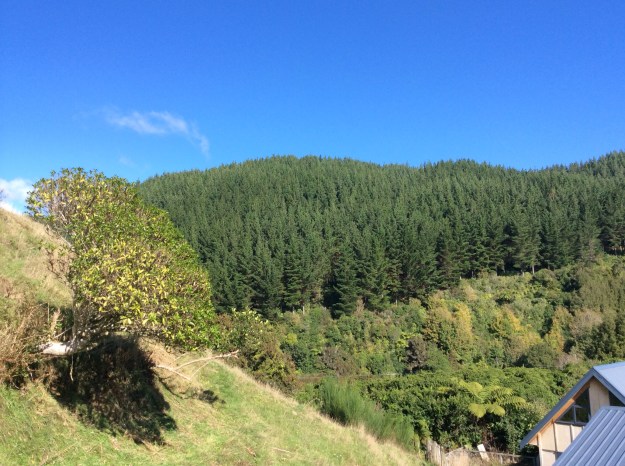

(The view from our room, a little hut on the hill. Perfect.)

Hitch Hiking

Hitch Hiking.

Having flown from Melbourne to Auckland we stayed the night in the 38th different bed since leaving the Rectory in November! And in the morning we set off bright and early to start a three day trip down to the south of North Island. Looking to save money we decided to try our hand at hitch hiking. We had arranged people to stay with for the following two nights in a sort of zig-zag across the country we just needed to get to them using our thumbs.
A brief “How To” guide for getting lifts by standing at the side of the road in New Zealand.
How do you entice people to stop their comfortable cars while they’re driving along and invite two total strangers who might well, for all you know, have issues, fleas, weapons, really irritating laughs or possibly all of the above? Well, being two middle aged would-be hitch hikers (just typed that and the iPad rewrote it as kitsch hikers which is kind of sweet) we thought the best way of getting lifts would be to carry awesome signs.
We had all sorts of signs planned but the practicalities of having too much writing were difficult to overcome. “Sorry, all the young good looking ones have already gone – just us left now” or “So far today has gone without a hitch : (   would, I’m sure, have worked but we only had two small bits of card we managed to borrow from the people we were staying with in Auckland – so we made do with “South” on one and “Please” on the other. 
 

And by jingo they worked! Day one: Auckland to Tauranga which is across on the east coast.

Lift 1. We spent the first 6 minutes “debating” whether we were better off standing at the top of the slip road which had no real stopping place, or before the traffic lights on one of the two roads leading to the slip road. This had better stopping places, but only half the traffic. I was just telling Ella how misguided her views on the  matter were and how we should move to the other place when a van stopped and picked us up. The old Maori lady and her daughter
In the cobbled together camper van took us 10 kilometres, to just outside of Auckland and dropped us off. I think that was as far as they were going rather than that we had done something to offend them (I am sure it’s good Maori manners to rub noses….) but 10 km is all we got.

We were just getting into a discussion as to whether we would have been better off where we were in the first place as this slip road didn’t look like it would have much traffic on it when (3 minutes waiting time) a guy in a well named pick up truck stopped. He was going to Tauranga which was where we were hoping to stay that night, which was handy, but he was going via Hamilton where he had half an hour’s work to do in his office, but he could drop us off for a coffee while he went in to work and if we didn’t mind the wait he could then take us all the way.
En route he decided to take us to see Hobiton, the setting of Bilbo Baggins’ village in The Lord of the Rings and now a bit of a tourist attraction seeing as we were passing 5 km from it. As he got to the car park he announced: “Well, we can’t go in as it’s 75 dollars each and we haven’t got time, but anyway, it’s over that hill and looks pretty much like it did on the film so you get the picture”, and we turned round and drove off.
When we got to Hamilton we were left with an awkward choice. He dropped us off at a coffee shop and said he would see us in half an hour. We had been in the car with him for 90 minutes and he seemed like a really nice guy, and he had, to his credit, almost taken us to one of the main tourist attractions in the area. So, is it impolite to say that you will get your bags out of the back and sit with them while he goes off (subtext – cos we don’t trust you you Bilbo Baggins tease you). Being British this was tricky. We had passports, wallet and iPads on our persons, so we figured it was politer to leave the bags in the truck and he drove off. Just after he turned the first corner we wondered whether we should at least have taken a photo of the registration plate….
“Yes, that’s right officer, we did indeed just get out of the truck of a total stranger and deliberately leave our entire luggage in there and wave him off. What did the truck look like? Well, it was white. Any other distinguishing features? Umm, well, it’s got our bags in the back. What? Yes, we know – it was a bit, wasn’t it. Pardon? Oh no, don’t be silly; this wasn’t our first ever lift. No, no, no.
It was our second. Well, you see, he had taken us almost to Hobiton….”

With not much else to do we had our coffee. We waited. An hour passed and we began to get just a teensy bit concerned. Another half hour passed and we thought things were getting worryingly suspicious so we had some cake. Just under the two hour mark (which we had agreed would be the police calling point) he returned.
OK, chalk one up to experience – we wouldn’t make that mistake again. (At least, not until about 20 hours later…..)
Still, we got all the way to where we were headed and had a good evening nattering to our hosts, who the folk at the River Monastery had put us in touch with.
Next morning we were heading down to Turangi, a few hundred kilometres south west. So our “south” and “please” signs were still good. And so were our finely honed thumbs. Before our hosts had even turned the car round having taken us to the main road out of town a car had stopped. It took us a few km more to a main road and this led to an entire two minute wait for the next lift. (This hitch hiking lark is a piece of cake.) The lady (Greeta) took us a good chunk of the way and turned out to be fascinating company. She is the widow of the only New Zealand Formula 1 world champion, Denny Hulme and was full of wonderful stories of life on the motor racing circuit back in the ’60s and ”70s. She threw in a guided tour of her home town of Rotorua and even took us to lunch! (It was here that we got out of the car and left her to find a parking space, leaving our bags in the boot….. But we totally haven’t done that again since.) We then got a lift from two American students, one of whom lives in Boston and the other in New York, two of the cities we’ll be going to when we’re in the U.S, and who invited us to stay with them when we get there. They dropped us off at Lake Taupo where we grabbed a coffee, wrote a new sign for Turangi which was still 30 km away and had literally only just got to the side of the road when the first car passing stopped and asked where we were going. Not being sure how to pronounce it I looked at the sign and said “This place” and the driver asked who we were staying with there. We told her and she said “That’s Uncle Sam: jump in!” and took us to his door. I may never get another coach or train again!
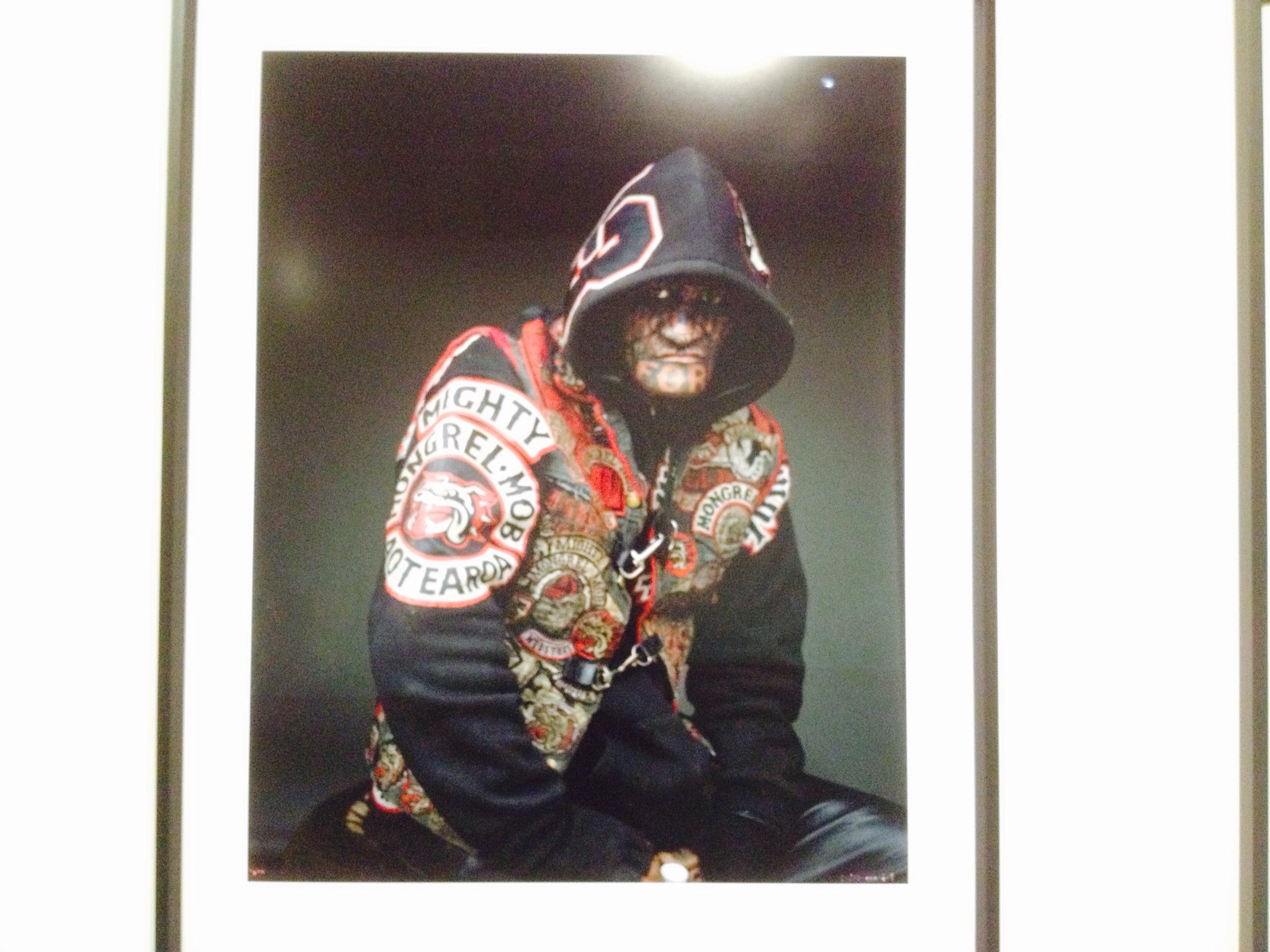
The people we were stopping the night with, Sam and Thelma, live with 4 generations of their family in a former hospital. It’s a warren of corridors and rooms all on one level, stretching hither, thither and over yonder. Sam is well known in New Zealand for his work over many years with the Mongrel Mob, a hard as nails group whose gang members make up over 10% of the entire New Zealand prison population at the moment. Sam works with groups of gang members who want to get back on the straight and narrow often having been through rehab and has an amazing attitude to life and to restoration and to working with people who have been cast out from society and looked on with equal measures of fear and loathing.

(One of the members of the Mongrel mob)

Sam and Thelma have, for decades now, run an open door policy and welcomed in all sorts. Living with them, befriending them – seeing lives turned around and others wandering off in a destructive direction. Knowing jubilation and heartbreak – seeing hospitality and trust at times ripped up and crushed and yet offering more with an open hand and open heart. We spent the evening talking with Sam about his whole philosophy of how he sees his Christian mission. It is very hard to fault what he does and why he does it – and it is immensely challenging.

He and Thelma stand where most people would be far too concerned for their own comfort to stand. They offer a listening voice, practical help, acceptance, time and have gone without much while reaching out to thieves, addicts and murderers. He has a bunch of the Mongrel Mob living next door to him in a house he secured for that very purpose. Christ can be seen in people of many different shapes and sizes: he can definitely be seen in a certain big 20+ stone Maori called Sam.
The final leg of our three day hitch-hike came in the rain the next morning when a half hour (much of which was spent singing and dancing to songs with rain in them) wait led to someone taking pity on us and taking us a few hundred km closer to our goal. from there it was but a two minute wait for the final lift right down to Waikanae, the closest town to the “in the middle of nowhere” community in which we’ll be staying for 4 weeks.
Zig zagging from Auckland to just north of Wellington over three days, 8 lifts and an average wait time of under 9 minutes per lift. Lots of interesting people and stories. Hitching is the way to travel in N Z.